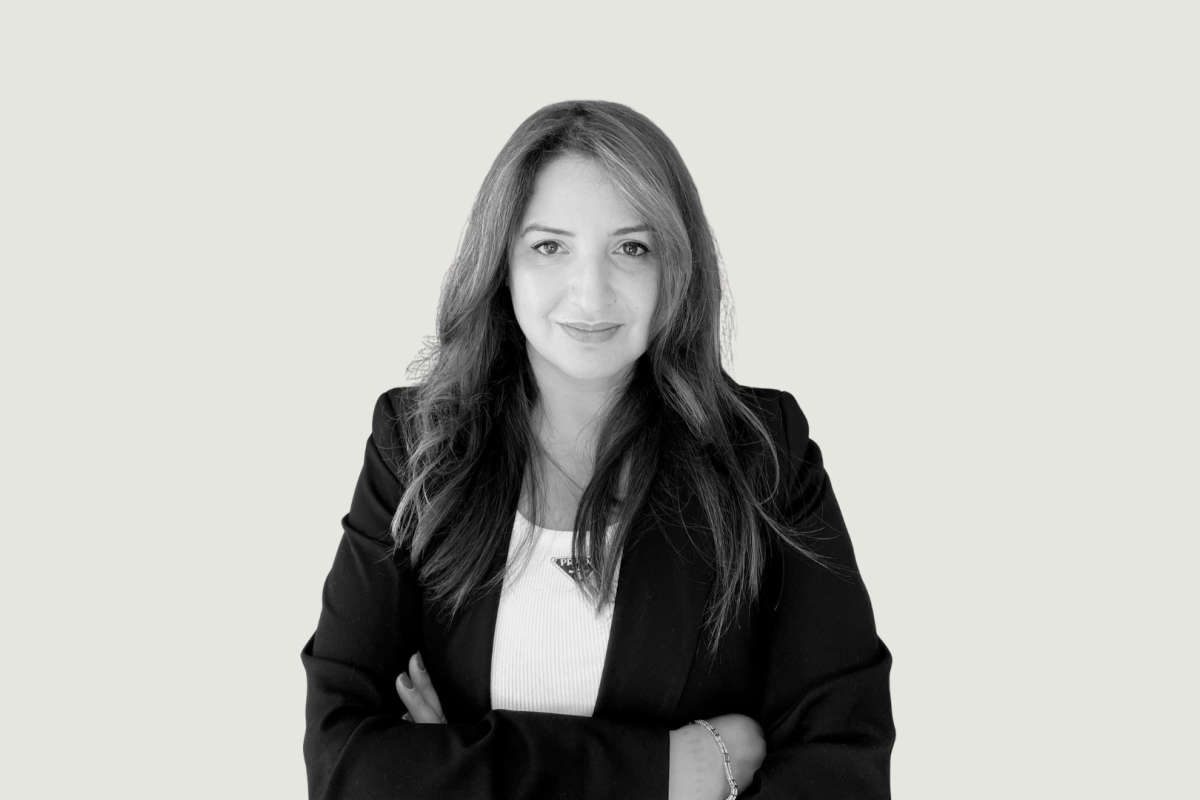
We are delighted to bring you a Member interview with Yosr Najjar, Founder and Principal Consultant, Organizational Intelligence.
What's your golden rule?
I try to understand what might be shaping someone’s behaviour before I judge the person. That doesn’t mean excusing everything; it means beginning with curiosity and looking at the conditions people are working in. When we understand those conditions, we can have more useful conversations about responsibility and change.
Who has been your biggest influence and why?
My mother. She comes from a five-generation lineage of embroiderers, and I grew up around the patience, skill and creativity that go into that work. She showed me that meaningful things are made one deliberate stitch at a time, and that it takes courage to honour where you come from while choosing your own path.
What is your most hated business expression?
“Let’s take this offline.” It can be useful when a conversation genuinely needs a smaller group, but it’s often used to move the real discussion out of the room. I’m interested in how meetings help people make progress, so I’d rather ask: “What do we need to resolve, and who needs to be part of it?”
What's the smartest business idea you've ever had?
One of the smartest ideas I’ve had was that, when customers aren’t asking for a product yet, marketing may need to help create the market around the problem it solves.
One of the most important lessons in design thinking and innovation is not to fall in love with the solution, but with the problem. Yet early-stage companies can build something they believe in before the people it’s meant to help recognise the problem or know that a solution is possible.
I experienced this at Branching Minds, where I joined at an early stage to build the marketing function from scratch. We were offering technology to help schools implement MTSS (a learning framework), but many educators weren’t yet familiar with the framework or looking for technology to support it. We couldn’t lead with the product. We had to build awareness of the problem, explain why effective implementation mattered, how the framework helps, and show how technology could make it happen.
To me, that’s what creating a market means: not manufacturing a need, but helping people recognise a problem they haven’t yet named, and see a useful way to address it.
Which leader do you admire most and why?
Amy Edmondson. I admire how her work has helped leaders understand the role psychological safety plays in learning, speaking up and working through uncertainty. She makes clear that creating a safe environment doesn’t mean lowering expectations; it means helping people raise concerns, share ideas and learn from mistakes so the team can do better work. That connects strongly with my interest in how teams collaborate and what helps people contribute fully and be creative without borders.
What is on your mind the most right now as a marketing leader?
I’m thinking about how marketing teams can become natural labs for new ways of working. Experimentation is already part of what marketers do. We test ideas, learn from what works and what doesn’t, and double down on what shows promise. A failed test isn’t wasted effort if it helps us quickly learn what not to scale.
With AI changing how work gets done, marketing teams could be a natural place to test new tools and ways of working, model change, and share what we learn across the organisation. How can we create space for that kind of experimentation and help organisations rethink how work gets done?
Why is being part of The Marketing Society important for your career?
Because it feels like being with my tribe. I’ve been a marketing professional for 15 years and have worked across many parts of the discipline: first in agencies, including FMCG, then on the client side across technology and services. Digital marketing became a big part of my work, and over the years I’ve built marketing teams from scratch several times.
That experience has taught me a lot about marketing and about how the way teams work together can either help marketing contribute to the business or hold it back. I’m now developing practical ways to help teams collaborate and work better. Being part of The Marketing Society matters to me because I can stay connected to my peers, keep learning from them, and share some of what I’ve developed with the marketing community.
Why does marketing matter to you?
Marketing matters because it helps people understand what is possible and why it matters. At its best, it connects a real need with something that can meet it, while helping organisations grow. I’ve always been drawn to the way marketing can change what people notice, believe and do, and how that influence can be used to create progress. Marketers are change makers.
Tell us something that's not on your CV
I grew up around my mother’s embroidery work and a five-generation family tradition. I also grew up in Tunisia, built much of my career in the United States, and now live in Dubai. Moving between languages and cultures has shaped how I listen and how I work: I’m often looking for the different perspectives in a room, and for the pattern that appears when you bring them together.
Not a member yet?
Now it's time for you and your team to get involved. Get access to world-class events, exclusive publications, professional development, partner discounts and the chance to grow your network.
Our Membership Speaks For Itself. Be part of it.
Become a Member
If you’d like to know more, please leave your details on the form below, and we can reach out to you.
Enquire here