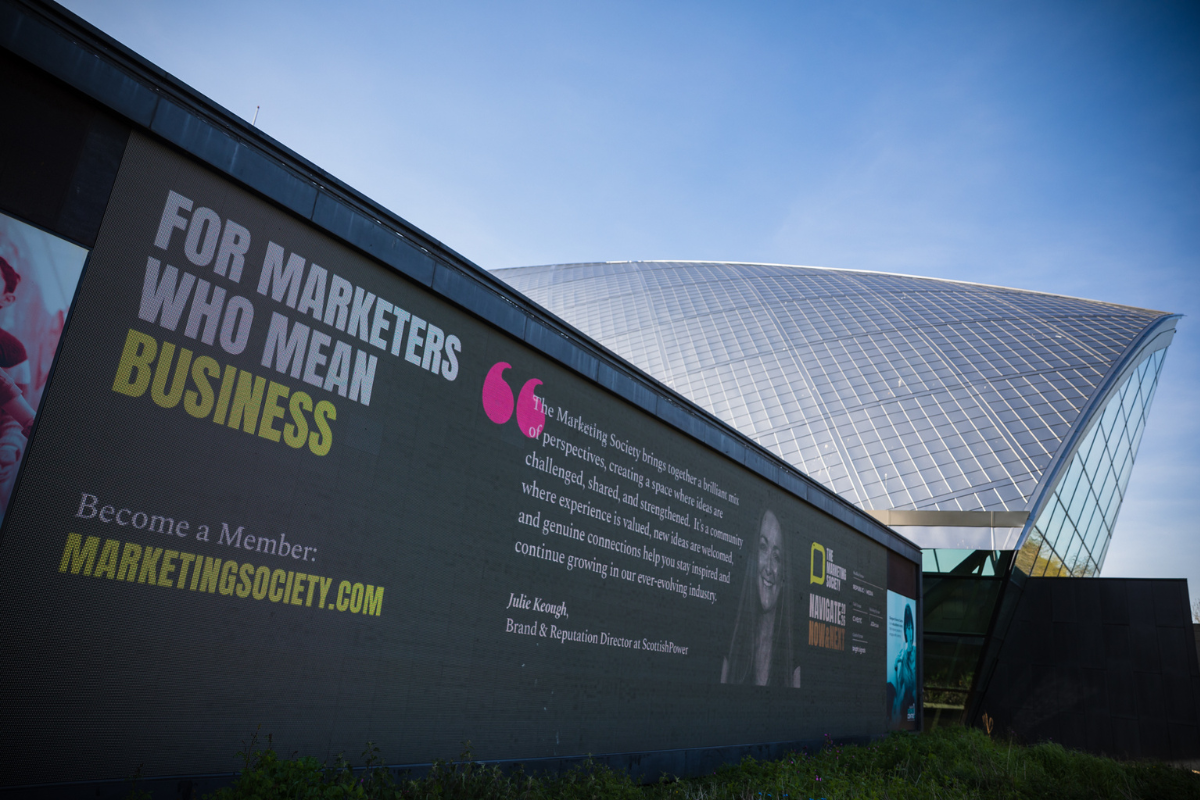
With AI dominating almost every conversation in the industry right now, it’s no surprise that it shaped much of the discussion at this year’s Navigate Now & Next. There was a noticeable mix in the room…curiosity, excitement, and the slightly uncomfortable question of “what does this mean for us?”
One thing became inherently clear across the day: AI might be changing how we work, but it’s also forcing us to get clearer on what makes us valuable in the first place.
On that note, here are my five key takeaways from the day:
AI predicts. Humans imagine. That’s the difference.
This was hands down my favourite line of the day.
Crawford Hollingworth opened with something simple, but it completely reframed how I was thinking about AI. Instead of feeling like we’re competing with it, it felt more like we’re being pushed to lean into the things that make us… us.
He broke it down into three spaces:
- What AI does best
- What humans + AI can do together
- And the bit we often overlook… the human advantage
And that last part is where things get interesting. Because while AI can generate, optimise and scale, it can’t replace instinct, originality, or emotional nuance.
That’s where we add value.
If it doesn’t land in two seconds, it doesn’t land at all.
JCDecaux’s OOH session was easily one of the most practical.
The rule with creative? You’ve got two seconds to engage your audience.
Which in short means everything has to pull its weight from the logo to layout, colour and message. It’s less about adding more, and more about having less.
But it’s not just about being noticed, it’s about being remembered. And more often than not, that comes down to how the creative makes you feel, not how complex it is.
It’s a good reminder for those of us agency-side that we can layer and tweak ideas endlessly, but if it doesn’t click instantly, it’s likely overly complicated and trying to do too much.
You can’t optimise your work if you ignore how you feel.
This session took a slightly different turn. Less about tools, more about people.
Loral Quinn introduced the idea of “emotional drift” where everything defaults to the feeling of fine. Not good, not bad… just neutral or somewhere in between.
As she put it: “Fine is not a feeling, it’s a filter.”
In agencies, in-house teams, and workplaces in general, it’s easy to stay in constant motion, busy, delivering, always on, without really checking in. We work in an industry built on understanding people, but don’t always apply that lens to ourselves.
Yes, AI can optimise performance, but it can’t tell you when you’re burnt out or just going through the motions. That doesn’t change, and that’s where you become accountable for yourself.
Community isn’t a tactic, it’s the strategy.
Brands aren’t just competing for attention now, they’re competing for belonging. And that’s where community-led growth really matters, because belonging is much harder to build than reach.
Pip’s discussion stripped things back and made me think about real-world habits- run clubs, spin classes, even the same coffee spot every week. You don’t just go for the activity, you go for the people and the sense of community… and that’s the shift.
Because while brands can create content all day long, they can’t manufacture a genuine connection. And audiences are getting better at spotting the difference.
If you take anything away, it’s that attention is easy to buy, but community isn’t. Attention is fleeting, community lasts.
AI is the intern. You’re still the creative director.
One line of the day that really stuck with me was: “AI is the intern, not the decision-maker.”
It may be fast, efficient, and always available, but it still needs direction, context, and judgment. That’s where we marketeers come in.
Because while AI can support ideas and speed up output, it can’t replace personality. It can’t replace instinct. And it definitely can’t replace accountability, as when things go wrong, someone needs to take ownership.
So yes, I’ll use it, get comfortable with it and push it where it adds value. But the thinking still sits with me.
Final thoughts
If you missed all the fantastic chat, learnings, and a bit too much wine at last week’s event, here are two things worth actioning:
- Create more space for “human thinking”. It’s inevitable that AI will keep evolving, but human traits like imagination, emotion, and judgment are becoming more valuable, not less, so we need to prioritise them.
- Think beyond audiences and into communities, consider what people are actually part of, not just what they’re being shown.