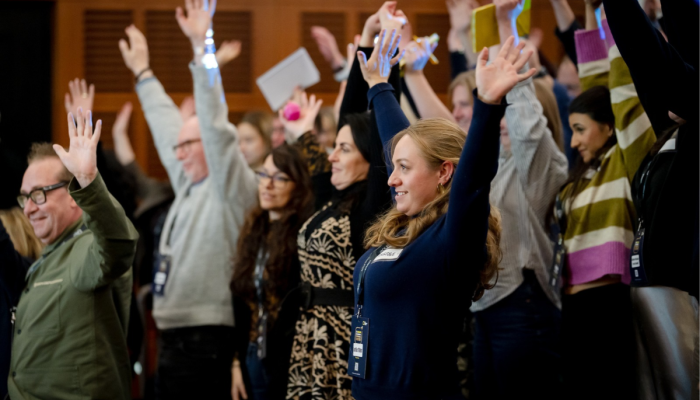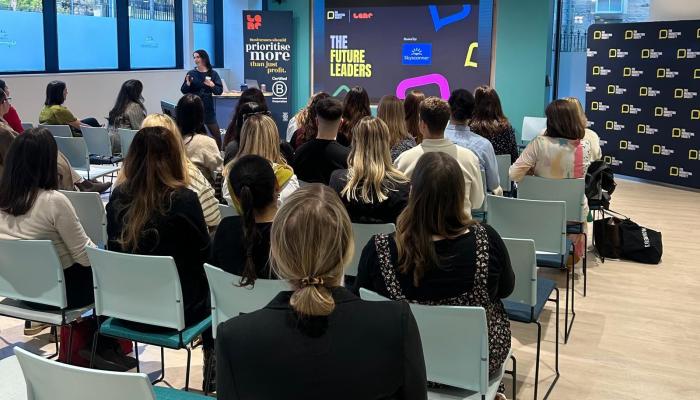
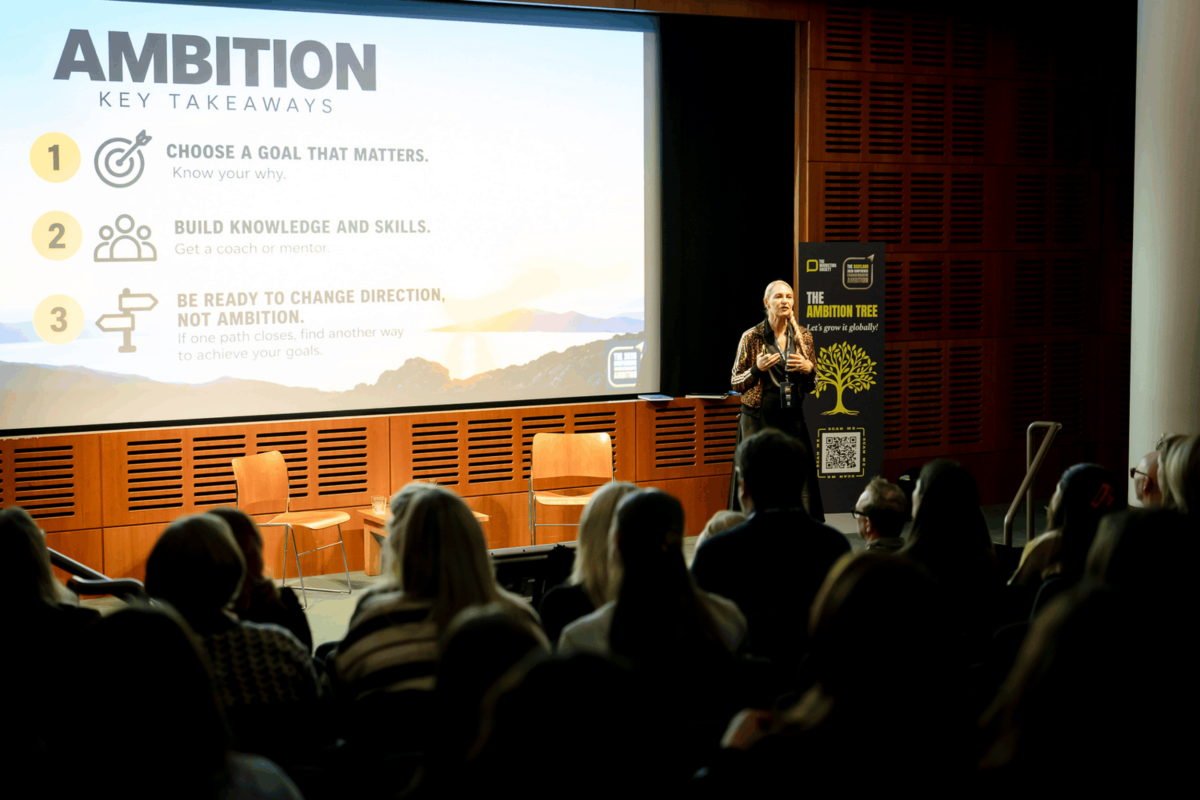
On Tuesday 27 October, The Marketing Society's Changemakers Conference came to The National Gallery on the Mound in Edinburgh. The theme was ambition, and speakers from Center Parcs, M&S, DC Thomson, Street Soccer and Sunshine showed what it looks like when it reaches past the marketing department and into the product, the team and the wider community. The day treated ambition as a source of energy rather than pressure, and asked every marketer in the room to decide what they will do with theirs.
The day in brief
Sophie Devonshire opened with a line attributed to Michelangelo: "the greatest danger is not that our aim is too high and we miss it, but that our aim is too low and we reach it". She gave the room three questions to carry through every session: what are they saying, so what does it mean for me and my business, and now what will I do as a changemaker? Attendees were also invited to add their own ambitions to the Ambition Tree, which is building a global picture across the Changemakers cities.
Sara Holt, Chief Marketing Officer of Center Parcs UK & Ireland, set out how marketing can shape the product as well as the message, and shared the ambition behind a new village in the Scottish Borders. Sharry Cramond of M&S talked about building emotional loyalty, repeating what matters and banning the generic. DC Thomson's Owen Wyatt drew on his grandfather's example of resilience, and Matt Higgins of Sunshine told a five-minute story about changing career. David Duke MBE of Street Soccer spoke about how football gave him direction after homelessness, and how brands and charities can build something meaningful together. Chris Baréz-Brown of Upping Your Elvis closed the day with practical ways to turn ambition into action, from protecting your best thinking time to running small experiments.
Five themes from the day
Look past the advert
Sara Holt's most striking point was commercial. Center Parcs put £150 million into the guest experience last year against £20 million in marketing and advertising. Guest insight drove a new local-themed gastropub and an immersive entertainment space that has sold out since it opened, and adding Apple Pay to the app lifted leisure revenue by 6%. Those app and checkout changes matched the return on the TV campaign, even though they were harder to build a business case for. Marketing's biggest growth lever may sit in the product, the app or the checkout, and marketers need to earn a place where those investment decisions are made.
Own an idea only you can say
Both Sara and Sharry Cramond challenged the room to be more distinctive. Center Parcs replaced "family togetherness" with "We Build Better Worlds", because any competitor could have claimed the old line. Sharry asked her M&S teams to drop any campaign that could carry another brand's logo, and to look for claims only M&S can make, such as tracing its beef back to the farm. The test is simple: if the work still makes sense with someone else's logo on it, it is not yet yours.
Repetition builds memory
Sharry also made the case for consistency. M&S brought back "This is not just..." after discovering that the business had stopped using it while customers still remembered it. Fashion, Home and Beauty keeps returning to "Love That". The warning was not to move on from an idea before customers have absorbed it, because marketers tend to tire of their own work long before the audience does.
Colleagues and communities shape how customers feel
In her first 100 days, Sara worked on the front line and heard remarkable colleague stories that advertising had never told. Staff engagement rose after the new brand launched. At M&S, stores run their own TikTok accounts and choose how to present each initiative locally. Beyond the business, Center Parcs' new £450 million village in the Scottish Borders is expected to create 1,200 permanent jobs, and David Duke's session showed what brands and charities can achieve together. How colleagues feel about a business shapes how customers experience it.
Ambition needs resilience and managed energy
Owen Wyatt described a year when several pressures landed at once, and the lessons he took from it: assemble a strong team, simplify, keep people aligned and keep communicating. Chris Baréz-Brown reminded the room that work will take all the energy you give it, so save your best thinking hours for consequential work. He also made the case for small experiments over debating the perfect approach. Matt Higgins added that being good at something does not mean you cannot be better at something else, and Sharry's personal advice was to write your goals down and revisit them often.