
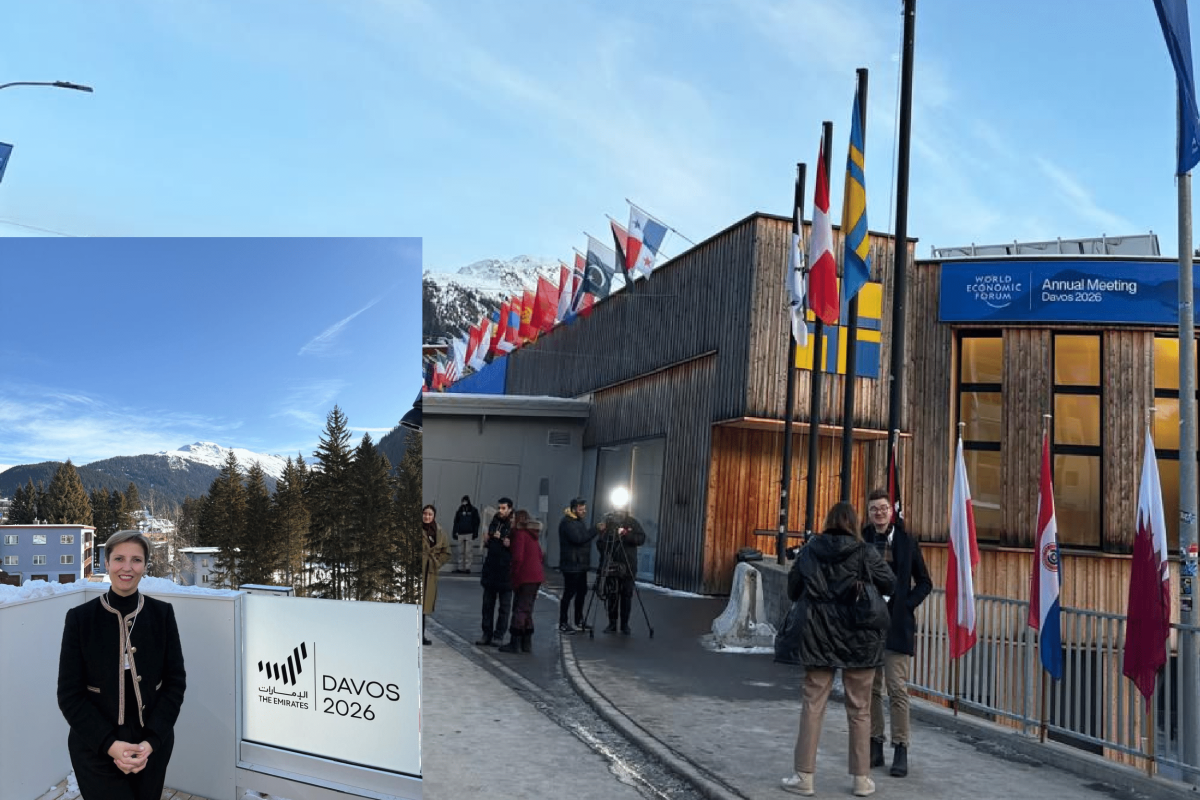
Every January, Davos becomes shorthand for visibility, access, and influence. From the outside, it looks like a carefully devised stage for innovative ideas, new relationships, reputation building, and deal-making. From the inside, especially for in-house corporate affairs and communications teams, it is something else entirely: an endurance test of disciplined strategy, situational judgment, and speed of execution.
Having experienced Davos both from the outside as an external advisor and from inside the engine room, the lessons are abundant.
As consultants, we sit behind the curtain. We plan engagement strategies, map stakeholders, refine messages, and define outcomes. All of this is essential. No one should arrive in Davos unprepared. Clear objectives, stakeholder mapping, messaging, and engagement plans are non-negotiable.
But no amount of elegant planning fully prepares you for what happens on the ground when every hour rewrites your priorities.
Planning alone does not deliver value in this setting. Execution does.
When Plans Meet Reality
Once on the ground, the best-laid plans rarely survive first contact with the security perimeter. Schedules shift. New “must-meet” stakeholders appear. Conversations you thought were peripheral suddenly become strategically critical. Agendas collapse and rebuild, sometimes several times a day.
In an environment where time, space, and priorities are compressed, execution is not about control alone. It is about controlled flexibility. This is where the difference shows most clearly for in-house teams.
Teams that succeed are the ones that adapt quickly while staying anchored to clear decision frameworks. Who matters most. What can move. What cannot. And who has the authority to decide in the moment.
Successful execution depends on fast, clear, and disciplined communication among the team on the ground. Everyone needs to know what has changed, why it changed, and what to do next. Immediately. This is where communications and strategy teams operate as connective tissue, ensuring information flows smoothly to and from leadership, to support teams for logistics, and to stakeholders for coordination.
When information flow or decision-making is slow, unclear, or emotionally charged, chaos follows quickly. When the machine is well-oiled, with clear roles, shared priorities, and parked egos, momentum builds. The difference between these two scenarios is stark, and it shows immediately.
Opportunistic Leadership
On the ground, value is created through action. Davos works best when teams are partnered with leaders who are instinctively opportunistic in the right way. Leaders who recognise a strong opportunity immediately, engage decisively, and move forward without hesitation. This changes the quality of engagements because when a genuinely aligned opportunity presents itself, it should not require layers of internal back and forth. Davos is not the place for prolonged debate. You are there to do business. When the opportunity is right, business you shall do.
There is also a less discussed reality. Stamina and emotional intelligence matter as much as strategy. Davos is cold, crowded, relentless, and unusually intimate. You have probably clocked 20,000 steps before lunchtime. You are tired, hungry, cold, and may already have slipped on frozen snow or come close a few times, all while spending far more time than planned with colleagues, in meetings, and moving from one large session to another. Under those conditions, taking things personally is a luxury no one can afford. Everyone else is navigating the same pressure and prioritising in real time. When you are waiting at that security check for the umpteenth time that day, do your breathing exercises.
The Power of Listening
Davos is full of ambition and big ideas. Everyone has something to sell, whether a new trillion-dollar idea, a partnership, an agenda, or yet another influential platform. For communications professionals, the real advantage comes from listening with intent. It means resisting the urge to constantly perform the narrative and choosing instead to absorb, observe patterns, ask thoughtful questions, and connect insights across conversations. Influence is built through attention.
Building Real Connections
The strongest engagements rarely begin with initiated messaging. They begin with curiosity. Which brings me to relationships. Yes, I know it is the most overused word in Davos commentary, and often still the most misunderstood. Davos does not reward card collecting. It rewards human connection. The conversations that endure are not the most polished, but the most human. Sometimes they start with policy, a market trend, or innovation. Sometimes they start with shoes, coats, where to get the best breakfast, or how not to freeze. That kind of humanity is not frivolous. It is the gateway to trust.
The Follow-Up Imperative
Not every conversation will last though. Not every connection should. That is the reality of places like Davos. The value lies in follow-up. When strong opportunities emerge but cannot be prioritised in the moment, the real work begins once you are home. Timely messages. Clear next steps. Consistent communication that signals intent and seriousness. Second-tier conversations often become first-tier opportunities if they are handled with care. Relationships endure not because they happened in Davos, but because someone took responsibility for carrying them forward.
Davos is not a branding exercise. It is not about being seen. It is a live-fire simulation of how organisations communicate under pressure, and it shows very clearly who is built for it. While owning the narrative is critical, Davos is a reminder that narratives alone do not land unless relationships carry them forward. In a week where everything feels urgent, the relationships that endure are rarely the loudest. They are the ones that hold long after the snow settles and the salt sets in.
Noha is a Member of The Marketing Society in the UAE