Think piece

The Marketing Society at Advertising Week Europe 2026

Session one

By Rachel Letham

Rebecca Dibb-Simkin Advertising Week The Marketing Society

We hosted two leading events at Advertising Week Europe 2026. Here Rachel Letham shares all the key insights you need to know.

Session One: AI’s Next Leap for Marketing Leaders

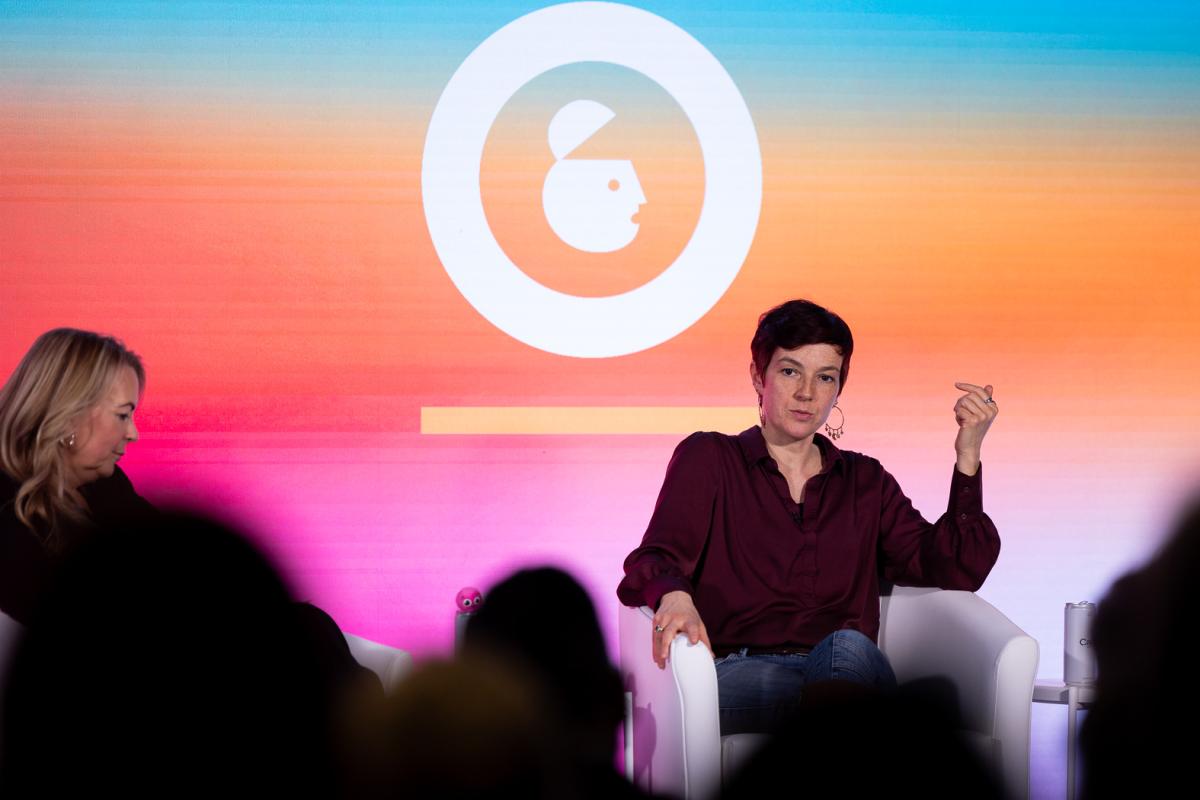
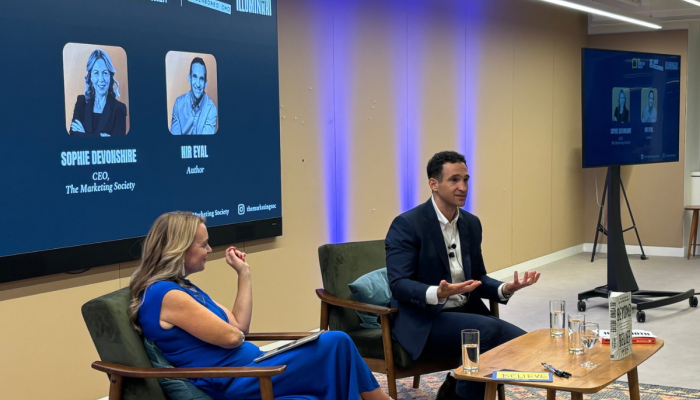
This fast-paced conversation explored where AI is delivering real commercial value, beyond the hype. Chaired by Sophie Devonshire, speakers Mark Given, Chief Technology, Data & Marketing Officer, Sainsbury’s & Argos and Rebecca Dibb-Simkin, Chief Product and Marketing Officer, Octopus Energy, brought candid, practical perspectives from organisations at very different scales and stages. The session was grounded throughout by a single question: What does it mean to actually use AI well, for your customers and your teams?
 

5 key insights from the session

Hold the optimism and the scepticism in parallel

Rebecca was enthusiastically optimistic about AI; Mark was more measured. His framing was useful: the challenge is not whether to engage with AI, but how to separate genuine production value from experimentation and noise. Both agreed that it is entirely possible and sensible to be excited and critical at the same time. The sheer volume of tools and offers coming at marketing leaders right now makes that discernment more important than ever.

There are two separate AI questions and leaders need to answer both

How are your customers using AI, and are you meeting them there? And how are you using AI internally within your teams? These are distinct challenges that require distinct strategies. Treating them as one question is how you end up doing neither well. AI-first search is already a significant shift in how customers discover brands; that alone demands attention.

The customer must remain the anchor

Rebecca made the point clearly: AI risks becoming a tool for producing more, faster, without actually deepening customer understanding. Her head of digital marketing called it an “insight shift” using AI to get closer to what you already know about your customer, rather than bypassing that knowledge in the name of efficiency. No one outside your business knows your customer and your data better than you do. AI should sharpen that advantage, not dilute it.

Think wheels on suitcases, not moon landings

One of the session’s most memorable ideas: we put a man on the moon before we thought to put wheels on a suitcase. AI does not always have to be transformative. Often the most valuable use is identifying the points of friction in your customer experience and making them a little easier. Rebecca’s example was Octopus Energy playing the song that was number one when a caller was 14, if they are put on hold. It took half a day to code and six months to license. Simple, human, effective.

The infrastructure for personalisation at scale is now real but it takes time to build

Mark shared that Sainsbury’s is now delivering 30 million personalised offers a week across 5,000 products. Five years ago that was not possible. The infrastructure to make it work took six years to build. The lesson for leaders: the commercial payoff from AI investment is genuine, but the sequencing and the foundations matter enormously. Leaders who are building now are investing in what the next chapter will be able to do – not just what is possible today.