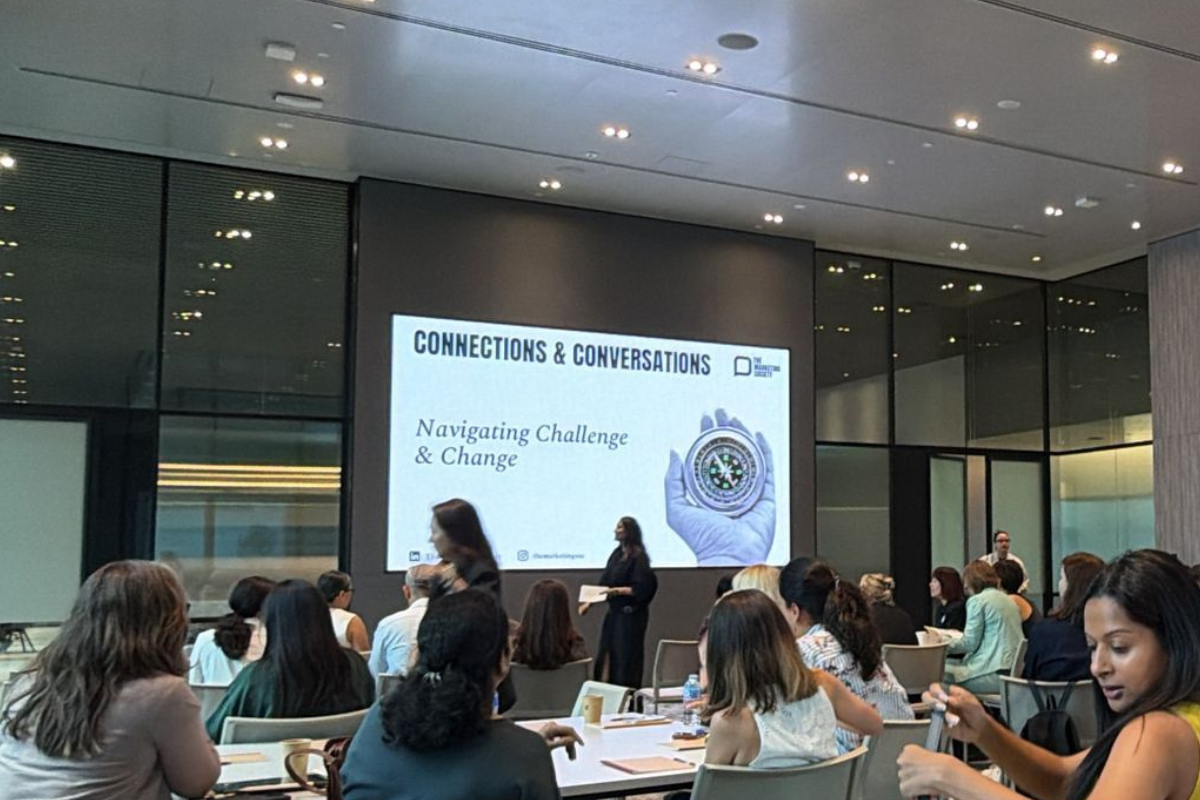
In a time when leadership feels a more complex, lonelier and faster endeavour than ever, this insightful session explored why clarity of self is the real anchor. Yan Yi Chee’s extensive experience and unique perspective helped lead a great discussion that reframed change not as a threat to manage, but as an invitation to lead more intentionally.
Markets have always shifted. Budgets have always tightened. Technology has always disrupted. What’s different now is speed and density of that change and disruption. As Yan Yi put it, the industry is facing new pressures, ten times faster, and often all at once.
Leadership, as a result, has become more complex and more isolating. The “hero leader” model no longer works. Today’s environment demands shared leadership, faster sense-making, and a far higher degree of personal resilience. Yet, amid all this volatility, Yan Yi challenged a common assumption, that the biggest risk isn’t disruption itself, it’s how leaders react. This might seem obvious but we all need reminding of that.
5 key points for every leader
Focus on what you can control, starting with yourself
Yan Yi grounded the session in a simple but powerful idea: most anxiety sits in the circle of concern, but real progress happens in the circle of control. While leaders can’t control market forces, restructures, or global instability, they can control mindset, energy, behaviour, and response. That’s where leadership actually shows.“Pushing harder” isn’t the same as moving forward
One of the most resonant moments was her critique of relentless optimisation. Productivity hacks, calendar stacking, bio-hacking, they promise progress but often deliver diminishing returns. When leaders stop listening to their bodies and instincts, exhaustion and burnout aren’t failures; they’re signals. Sometimes, slowing down isn’t indulgent, it’s a strategic imperative for the individual or the corporation.Being self-aware helps with the way you respond under pressure
Yan Yi described the three common responses to pressure, such as pushing harder, reverting to old behaviours, and hiding or staying busy. None of these make someone weak, they make them human. The difference between reactive leadership and intentional leadership is awareness. Recognising when you’ve dropped “below the line” into these behaviours and instead consciously operating above the line (being curious, accountable, open, responsible, positive). This takes practice before it becomes instinctive.Clarity of self is not a luxury, it’s a leadership tool
At the heart of the session was a deceptively simple exercise. We had to define our strengths, non-negotiable values, and unique contribution. Not as an abstract branding exercise, but as a practical compass. Leaders who lack self-clarity drift between roles, expectations, and priorities and often don’t know why they feel misaligned until it’s too late.Sustainable leadership is built, not improvised
Yan Yi reframed leadership development as a practice, not a breakthrough moment. Reflection, intention, action, repetition. Over time, this builds “muscle memory”, giving you the ability to respond calmly and clearly when pressure hits, rather than defaulting to old survival patterns.3 takeaways that stayed with everyone in the room
The real work of leadership is internal.
External change only becomes destabilising when leaders lack internal steadiness.Values misalignment explains more dissatisfaction than role mismatch.
Many leaders don’t hate their jobs they’re misaligned with the culture they’re in.You can’t lead others sustainably if you’re already depleted
Capacity management isn’t just personal, it’s a leadership responsibility. As Yan Yi said, put your own mask on first.2 things you can do now
Articulate your “sharp point”
Write down your top three strengths, three non-negotiable values, and the one contribution that would be missed if you weren’t in the room. Use this in interviews, career decisions, and priority setting. Perhaps even use it to decide if you should sign that offer on the table in front of you.Protect 10% of your time for what’s next
Don’t wait for the “gap” between roles to think of the future. Start laying breadcrumbs now, learning, experimenting, and exploring so future transitions are intentional, not reactive. Everything you do and everywhere you end up needs to be deliberate.A final thought
In an industry obsessed with external signals like trends, tools, platforms and tech, this session was a timely reminder that the most powerful leadership lever is still internal to one’s self. Clarity of self doesn’t eliminate uncertainty, but it makes it navigable. And in today’s industry landscape, that may be the most competitive advantage of all.
This quote stayed with me:

“The real challenge of disruption isn’t what’s happening around us it’s what happens inside us when the ground keeps moving.”
Yan Yi Chee