South Korea’s retail shift is powered by an unlikely mix: tech optimism and an offline retreat. Digital commerce has perfected convenience but economic uncertainty fuels a longing for sensory, real-world connection. Today, it’s experience, not the product, that has become the ultimate appeal.
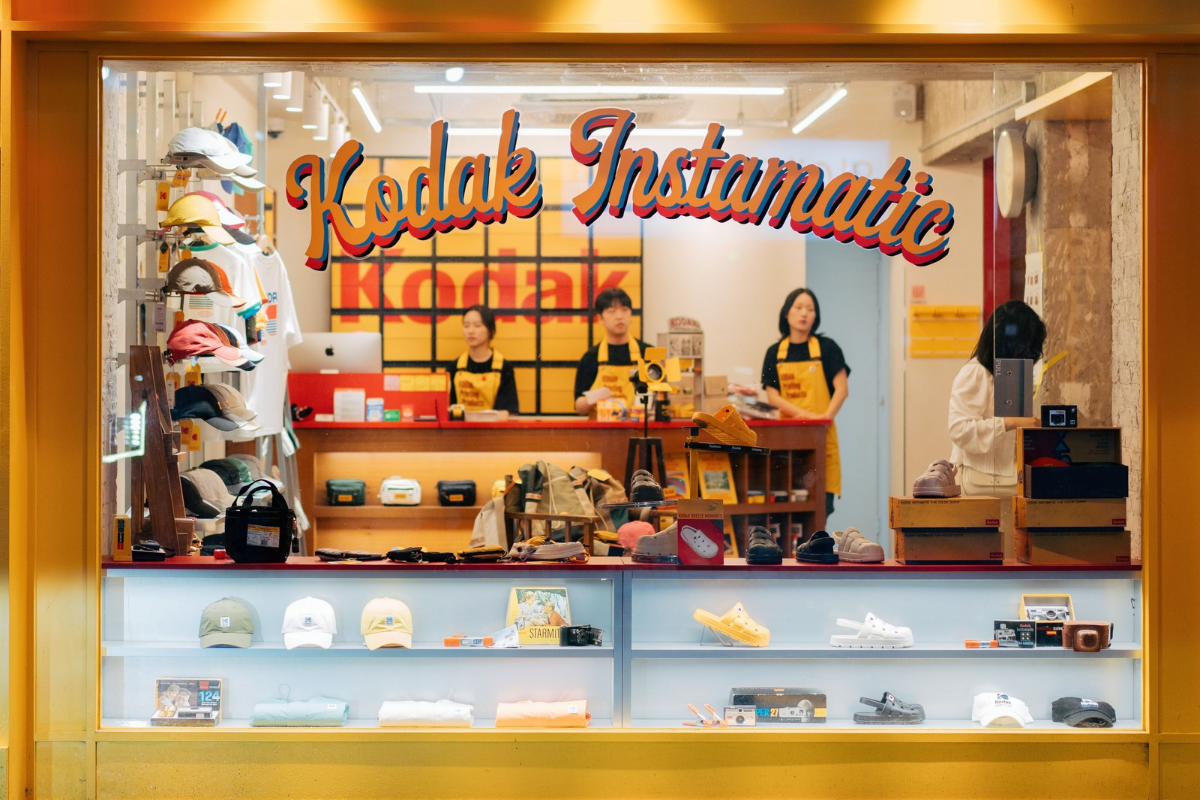
There’s been much talk about the death of the department store. Earlier this year, in the wake of Saks Fifth Avenue’s bankruptcy news, The New York Times posed the question: “Can Department Stores Ever Be Fun Again?” But while the demise of what was once the pinnacle of Western retail seems inevitable, the story in APAC is completely different. Take South Korea, for example: in 2025, the country’s major department stores – Lotte, Shinsegae and Hyundai – projected double-digit growth at the end of 2025. Meanwhile, the industry as a whole recorded an increase of over 12% in revenue compared to the previous year. One reason for this success lies in retail’s latest evolution: the pop-up store. Immersive and temporary, this format is designed to give customers a good time, not a long time. Stores are no longer just shopping destinations but also attractions that charm novelty-seeking locals and tourists. And while pop-up stores aren’t exclusive to South Korea, the market has perfected the playbook. Canvas8 discusses this in a new article that helps answer why South Koreans keep flocking to the pop-up experience.
Why is this important?
Online shopping is ubiquitous in South Korea, where online platforms account for 60.6% of combined retail sales. Since products can be browsed, compared and purchased from a smartphone, physical stores must make a case for themselves through something other than convenience. Since South Korean shoppers are both digitally fluent and deeply attuned to status, taste and novelty, physical retail is becoming a new kind of cultural proof – a place to access insider knowledge, signal discernment, encounter scarcity and participate in a brand before the moment expires. “There is a kind of ‘dopamine loop’ in South Korean shopper culture, where people look for frequent, small bursts of excitement rather than slow, long-term retail engagement,” says Dr Seung Hwan (Mark) Lee, Associate Dean of Engagement & Inclusion at Ted Rogers School of Management at Toronto Metropolitan University. As a result, immersive experiences have become temporary escapes.
What’s the behavioural shift?
The rise of pop-up stores suggests something more than a passing retail tactic. In South Korea, customer experience is moving from polished service and efficient transactions to something more physical, time-sensitive and socially legible: a form of value people feel is worth the trip in this age of instant convenience. While online channels still drive the strongest sales performance in the country, this offline channel has gained traction amid the stagnation of traditional brick-and-mortar stores, bringing colour and clamour back to the streets. The last year alone saw 3,077 physical pop-ups take place in Seoul – a 79% jump from 2024. Now, even permanent store locations are taking a cue from the pop-up playbook. Lotte, for example, recorded a 39% year-on-year increase in sales following the transformation of its Jamsil branch into one of the country’s largest immersive retail destinations, where consultation and tactile experiences take precedence over inventory stocking.
What’s the key takeaway for brands?
Experience, once treated as a supporting mechanism for sales, is becoming the product itself. South Koreans are facing a numbing, existential fatigue. This is partly driven by an unfavourable entry-level job market that has left nearly half a million Gen Zers in limbo, up by 58% from a decade ago. Many are now worn down by intense societal pressures and constant FOMO. There’s a longing for mood-lifting experiences that provide emotional escape and sensory respite from ultra-demanding lives. Unlike on-screen experiences, retail pop-ups can offer humanistic warmth and tactile immersion, inviting customers to feel, touch and participate in the brand lore. The Ordinary tapped into this with its hypersurrealist The Pore Playground at The Hyundai, Seoul, transforming skincare education into a magnified skin bed with volcanic 3D pores, trampolines and informational zones. For brands, the opportunity is to design spaces that shift people’s mood while deepening product understanding – less passive photo-op, more tactile reset with a strong point of view. For urban South Korean shoppers, loyalty begins when a store can reliably change the feeling of the day.
Global strategic insights agency Canvas8 is the official culture partner of The Marketing Society Singapore. Exclusively for members in Singapore and Hong Kong: Get eight weeks of access to the cultural intelligence that helps you move with certainty, not guesswork. Members, you will have been sent the link to access.