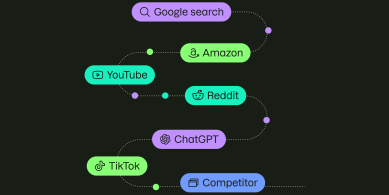
With attention fragmented and trust in an increasingly fragile state, growth is harder to manufacture than ever. The brands pulling ahead are not spending more - they are embedded in culture. Attention no longer lives in ad breaks. It lives in fandom, memes, WhatsApp groups, music drops, social and feeds and communities where meaning is created and shaped in real time. Nicola Graham explores this topic.
Think pieces
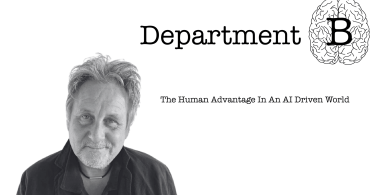
Most marketing agencies have AI now, as well as every freelancer and every graduate. And that means AI capability is
The Marketing Society Fellow Helen Tupper and Sarah Ellis hosted an evening with The Marketing Society in New York, to celebrate the launch of their new book Learn Like a Lobster.
In this piece, Alicia Coghlan argues that brand and performance marketing are complementary, not competing forces.
The "China Brand (R)Evolution" session at TikTok Singapore highlighted a seismic shift from low-cost manufacturing to purpose-led global expansion. By analysing the "Chu Hai" (going global) phenomenon and the collapse of the traditional marketing funnel, this article explores how brands must find their "cultural code" and empower local teams to survive a market defined by paradoxes and lightning-fast innovation.
In the race to move faster and do more, creativity is often what quietly shrinks first. This article from Layal Baaklini explores why that happens and how we as leaders can bring creativity back to full size. You’ll learn five simple ways to protect creative energy and help your team think bigger again.
In this piece Professor Gemma Calvert, Krishnan Menon and Gita de Beer argue that AI is making brands forgettable by prioritising efficiency and sameness over emotionally meaningful experiences that create the lasting memories that drive purchase decisions.
For over four decades, The Marketing Society Awards have illuminated marketing's true power - delivering measurable impact that transforms businesses
The article explores why working environments and cultural compatibility are a lot like the early stages of dating. Readers will learn why authenticity matters, how to spot the red flags, and why pretending never leads to a healthy match. It encourages both leaders and employees to recognise compatibility early and to walk away when it’s just not “the one.”
A think piece by Unilever's Andrea Cappi on why with AI and fragmented audiences, true competitive advantage comes not from more data but from deeper human understanding.
Every marketing team uses AI now but what they actually do with it varies enormously. Most marketing leaders can't tell who's using it well and who's just typing into it as Cemre Akkaya explains.
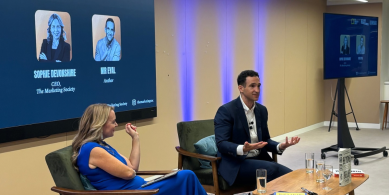
At The Marketing Society’s Dubai anniversary, Christina Peyton shares insights from Sophie Devonshire, Mark Ritson and Amina Taher, reminding marketers to slow down and get the basics right. Start with diagnosis and strategy, build emotional memory, take pricing seriously, and use AI to support strong thinking, not replace it.
The viral 'Chinamaxxing' trend shows Gen Z is seeking cultural inspiration beyond Western norms. This piece reveals what this means for marketers navigating cultural relevance, representation and the fine line between appreciation and appropriation.
BTS's comeback reveals something every marketer should pay attention to - as K-pop chases global scale, its most loyal fans are switching off. This piece explores what happens when brands sacrifice specificity for universality.
Leaders who thrive in today's world won't be those who move fastest, it'll be those who remain internally stable while navigating external chaos. This piece explores the pressure responses that derail leaders with practical solutions.
Think piece by David Pugh-Jones on where AI earns its keep, where it doesn't, and why the marketers who combine human strategic judgment with machine efficiency will be the ones who pull ahead.
After years attending Davos, for EY's John Rudaizky this year felt different. Here he reveals what the conversations around AI trust, youth opportunity and marketing's evolving role really mean for the work that happens after everyone flies home.
This think piece looks at how `Active Pulse' leadership is replacing the traditional top-down model with a curator-style approach where leaders stay close to the craft, amplify specialist talent and read market signals to drive creative excellence.
This piece by Roberto Moccia looks at how using AI without critical oversight risks optimising biases which can lead to brands confidently making wrong decisions and what we can do to mitigate this.
Tina Gupta's review of the recent Challenge and Change event reveals how in times of rapid change, senior leaders can navigate the uncertainty by shifting from reactive pressure and overwork to intentional leadership grounded in self-awareness and purpose.