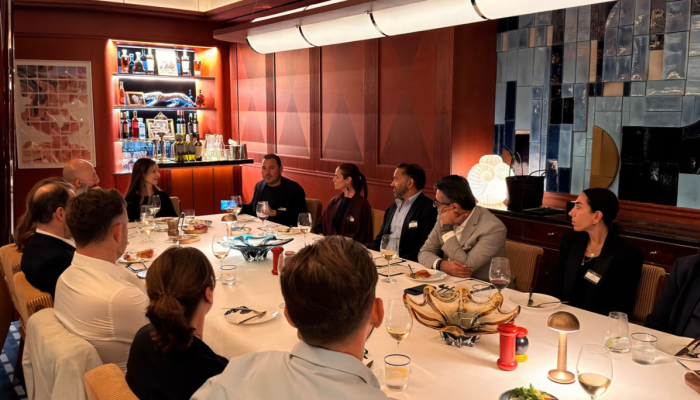
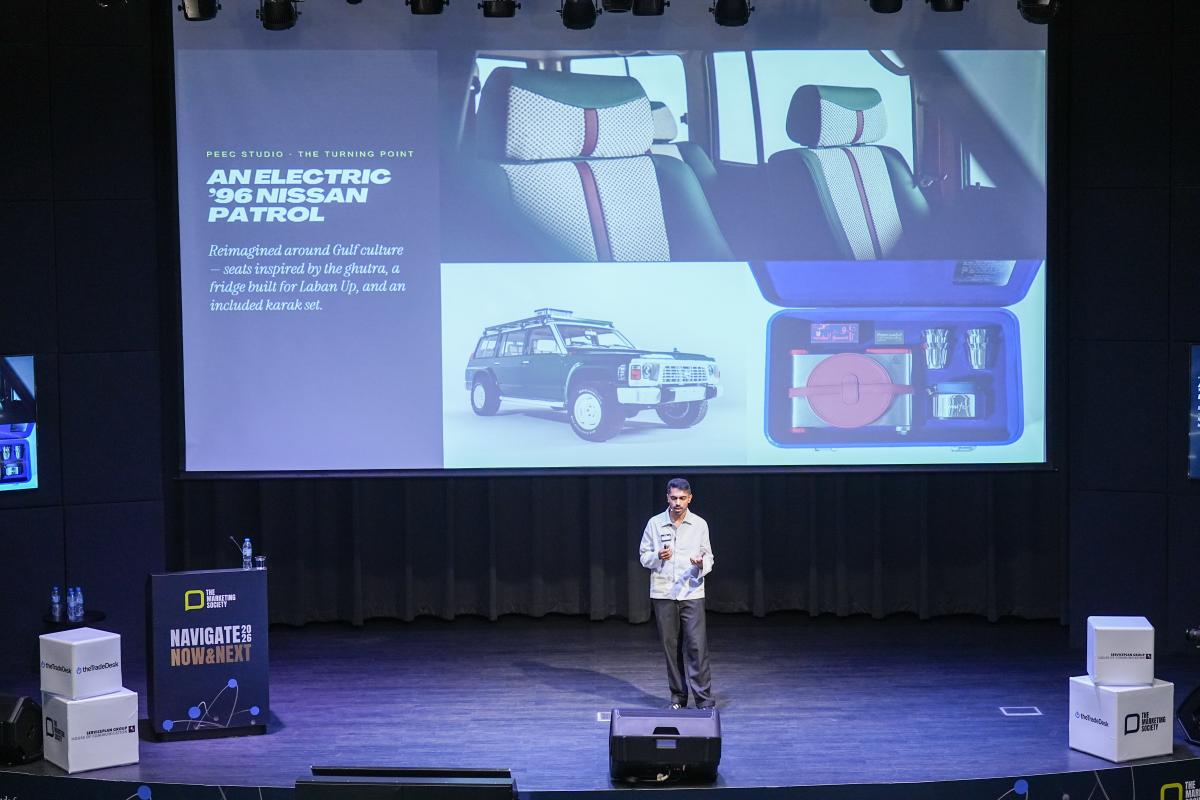
The Marketing Society's Navigate: Now & Next in Dubai brought together marketers, founders, technologists and operators to explore what comes next for our industry.
Credit to the The Marketing Society for creating an agenda that managed to be optimistic without becoming blindly enthusiastic - not an easy balance these days. I left excited by the speed of progress and wondering whether marketers are spending enough time thinking about what AI should do, not just what it can do.
Three ideas excited me. Two I'm still pondering.
1. Speed starts with trust
The Abu Dhabi Tourism case study covered multiple AI use cases, but a dinosaur named Stan ended up stealing the show. A huge part of that came down to Ghadeer EL Khub. It’s easier to believe in empowerment when the person talking about it is clearly living it. Stan went from idea to live content in roughly two weeks, generating millions of impressions and making science cool again.
“Content wasn’t made for leadership. It was made for kids.”
In a world where many organisations still create work for approval meetings rather than audiences, that felt refreshingly honest. Stan may have been the star. Trust was the enabler.
2. Marketing is matchmaking
Zain Shaikh shared ventures helping people find jobs, business opportunities and even relationships. Aly Abed's SifNow story started with what looked like a parking problem and ended with a much simpler insight:
It wasn't a parking problem. It was a matching problem.
Anyone who knows me knows I have an unhinged tendency to play matchmaker. People, ideas, opportunities, capabilities - if I think they belong together, chances are an introduction is coming.
Which is probably why marketing has always felt like a matchmaking business to me.
AI now allows founders to put working prototypes in front of investors, customers and partners in days instead of months, dramatically shortening the distance between an idea and belief.
Then Zain asked a question I found myself returning to: if everyone can build now, what becomes the differentiator? His answer was storytelling.
Technology may be democratizing creation, but stories remain one of the oldest ways ideas find people and people find meaning.
3. The gut still matters
Plan.Net showed something I’d been waiting to see for years: planning, allocation, optimization, workflows and measurement finally connected in one place.
Having spent years making marketing work at scale, I know how much complexity sits behind seemingly simple work.
Part of me loved it. Part of me immediately started calculating how many jobs disappear if it works as intended.
Which is why I suspect experience may become more valuable, not less. The hard part may no longer be creating options, but knowing which ones are worth pursuing.
Some call it judgment. Others call it gut feel - that slightly annoying sensation when you know something is right or wrong long before you can explain why.
A dinosaur advantage. Potentially followed by dinosaur extinction :)
4. The future doesn't need to be personal. Just relevant.
I absolutely believe in relevance. I am less convinced by the industry's growing obsession with hyper-personalization.
Lizzy Johnston put it perfectly: "I bought a pillow. I don't need another hundred ads for pillows." Exactly. Good marketing isn't selling me more pillows. It's making me want silk pillowcases next. Guess why
The most powerful advertising in history didn't succeed because it knew where people parked, what they searched for yesterday or which mall they visited last week.
It succeeded because it tapped into common human truths and made them matter to millions. The challenge isn't creating a million different messages for a million different people. It's creating messages that matter to millions.
5. People are complicated. And that's beautiful.
The funeral of the funnel featured prominently throughout the day. I’m not convinced.
Consumers were never as linear as the diagrams suggested. They asked friends, changed their minds, got distracted and occasionally bought things they never intended to buy. Social media simply gave us new ways to do what humans have always done.
I was less interested in whether the funnel is dead than how we convinced ourselves it was ever linear. The problem wasn’t the funnel. It was our tendency to turn messy human behaviour into a neat PowerPoint slide. As someone once described by a friend as “obituary”, I have a soft spot for dignified endings.
This one may have been slightly premature. Zain, perhaps our next venture should be matching people with better endings :)
For the TL;DR crowd:
Average just became AI.
Access became easier. Excellence didn’t.
Experience compounds.
The more AI creates, the more valuable judgment becomes.
Sharing is still caring.
If experience becomes an advantage, sharing it becomes a responsibility.
After all, every dinosaur was Stan once :)
Which brings me back to the idea I found myself returning to most:
“It wasn’t a parking problem. It was a matching problem.”
Maybe that’s all marketing ever was. Matching the right things with each other. And occasionally dinosaurs :)