
Think piece

Sometimes We Choose Our Challenges. Sometimes Our Challenges Choose Us.

What we decide to do next is what counts.

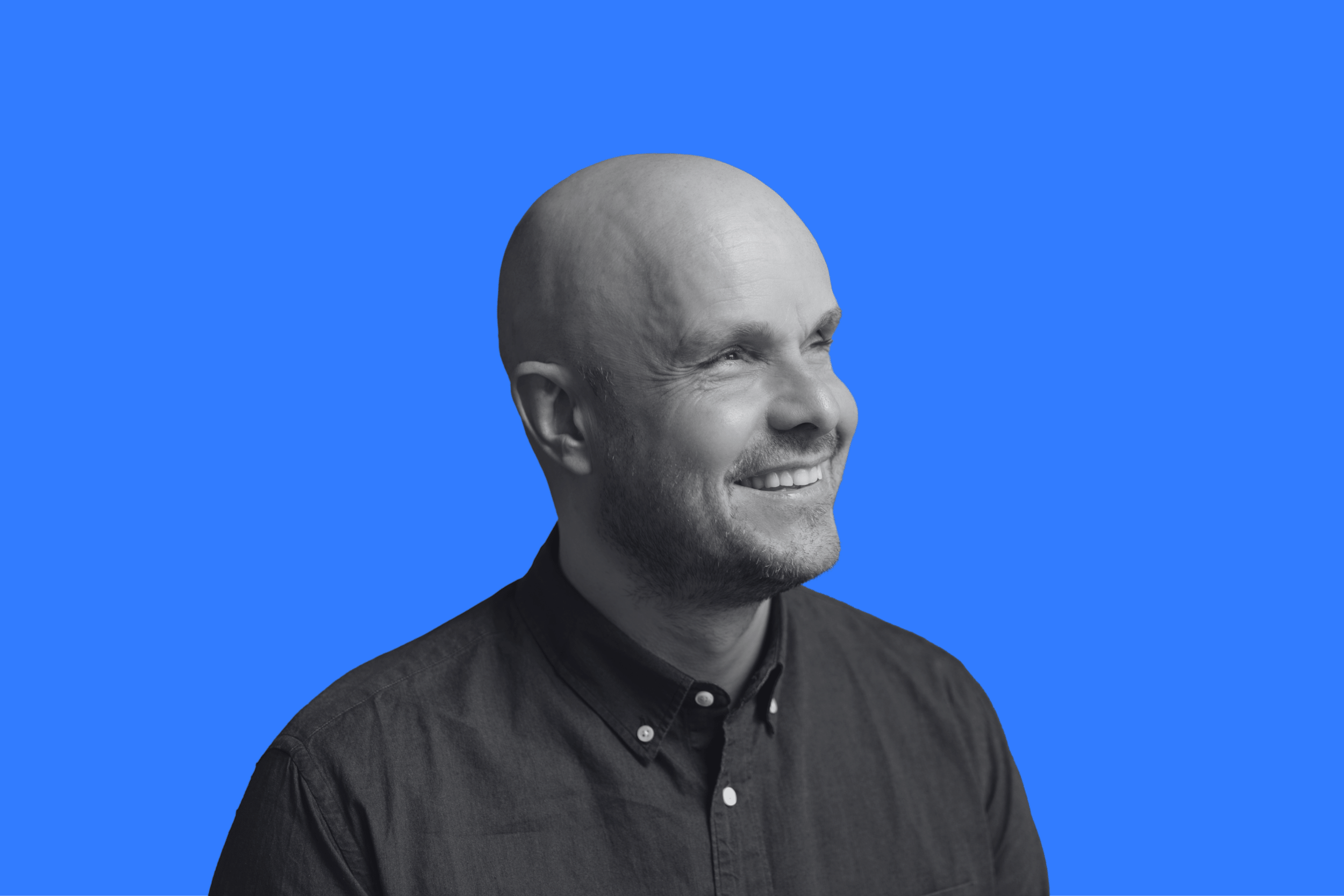
By Mark Pollock

Mark Pollock

Marketing leaders today operate in environments defined by rapid change, technological disruption, and shifting consumer expectations. The landscape is volatile, but within that volatility lies extraordinary possibility. 

At The Marketing Society’s end of year event in Hong Kong, I invited the audience to reflect on a single idea that has shaped every chapter of my life:

Sometimes we choose our challenges. Sometimes our challenges choose us.
What we decide to do next is what counts.

Across my experiences of losing my sight, rebuilding my identity as an adventure athlete, navigating the impact of paralysis, and catalysing global collaborations in science, technology, and investment, I have learned that our trajectory is shaped less by the challenge itself and more by the decisions we make after it appears.

Those decisions unfold across three dimensions: choosing to be a competitor, a realist, and a collaborator. These are not fixed traits. They are intentional responses or stances we adopt when the ground shifts, uncertainty rises, and leadership really matters.

1. Choosing to Be a Competitor, not a Spectator

When I lost my sight at 22, my identity dissolved in an instant. The familiar picture of my future disappeared, and for a period, I became a spectator in my own life. It wasn’t by choice, but by circumstance.

Yet even challenges that choose us force us to decide who we want to be next.

I decided to compete again.

That choice carried me back into elite sport, through races across deserts and mountains, and ultimately into a 43 day expedition race in Antarctica, where I became the first blind person to race to the South Pole. It wasn’t about taking part, it was about competing again.

The lesson for leaders is straightforward:

Competitors create clarity by acting, not waiting.

In my work with teams, I describe how clarity, commitment, and connection underpin high performance. Competitors do not wait for perfect information before they move. They step forward, learn through action, and uncover insight through momentum. In markets where change is constant, this behaviour is not optional, it is a basic requirement of the job.

2. Choosing to Be a Realist, Not an Optimist

A year after getting back from the South Pole, a fall from a third-storey window left me paralysed. In intensive care, optimism alone was not enough. Being positive mattered, but confronting the facts, accepting what I could and couldn’t control, and giving myself something to go for mattered more.

Realists confront the full truth: the possibilities that remain and the limits that cannot be ignored. This tension, between acceptance and hope, forms the foundation of resilience. It explains why some teams stall under pressure while others adapt, reorganise, and recover stronger.

Being a realist became my compass. It helped me see what was possible, what was not, and where my effort could be directed most productively. Leaders face the same challenge:

Being a realist is a liberator. It helps us focus on the brutal facts, sharpens decision-making, and reveals possibilities.

For marketing leaders navigating technological transformation, economic headwinds, or shifting customer behaviour, being a realist provides the grounding to act decisively and the clarity to adapt quickly when the landscape changes again.

Mark Pollock talking for The Marketing Society Hong Kong


3. Choosing to be a Collaborator, not a Soloist

Following paralysis, I embarked on a new kind of expedition, exploring the intersection where humans and technology collide to cure paralysis in our lifetime. And I discovered something unmistakable:

No individual solves complex problems alone.

For over a decade, I have worked with scientists, engineers, entrepreneurs, philanthropists, and global institutions, catalysing collaborations worth over $100 million. These breakthroughs were only possible because diverse expertise aligned behind a shared goal.

This principle applies directly to marketing leadership today:

Being a collaborator is not a soft skill. It is a performance imperative.

Modern marketing spans creativity, analytics, technology, psychology, and behavioural science. No single person or team has the complete answer. But when perspectives converge, innovation accelerates, and the seemingly impossible becomes possible.

Operating as collaborators is the mechanism through which complex problems become solvable.

TWO ACTION ITEMS

Choose your stance today

Ask yourself, “In the challenge I’m facing, am I acting as a competitor, a realist, or a collaborator. And, what would the best version of that choice look like?”

Start one intentional collaboration

Identify someone whose perspective or expertise could elevate your impact. Get in touch. Begin the conversation. Collaboration begins with a single decision not to go alone.

Closing Reflection

To close the session in Hong Kong, I asked the people in the room to shut their eyes and reflect on the message that framed our conversation:

Sometimes we choose our challenges.
Sometimes our challenges choose us.
What we decide to do next is what counts.

Competitor. Realist. Collaborator. These are not fixed attributes. They are decisions, available to us in every moment of uncertainty, change, or opportunity.