
“The ultimate search engine would understand exactly what you meant and give you back exactly what you want.” Larry Page, co-founder of Google and Alphabet.
AI is the Third Big Shift
The quote above was made back in 2006. It’s pretty crazy to think about this quote in the context of 19 years ago and how much users’ search behaviour and the search results page itself has evolved since then. With the recent launch of AI-powered search experiences, this quote has never rung more true. We have witnessed two major shifts in technology over the last few decades - the rise of the internet and the shift towards mobile. Now, we have entered the third big shift, which is AI.
How Search is Evolving
There are two prolific shifts that are happening, and I like to think about this search evolution in two parts. First, the questions people can ask and how they ask them, second, the results they get provided with.
The Questions We Ask
Of more than 5 trillion searches happening on Google annually, 15% of the searches we see every day are entirely new, and that has been true for more than a decade. But more importantly, the structure of these queries is evolving.
People are no longer just searching for keywords; they are asking complex questions. Globally, searches with five or more words are growing 1.5X faster than shorter queries. This new search behaviour is a big departure from how people have historically used Google.
Furthermore, "Search" is no longer limited to text, it is becoming multimodal. We are seeing visual searches via Google Lens growing at 65% year-over-year. Features like "Circle to Search" are blurring the lines between discovery and purchase.
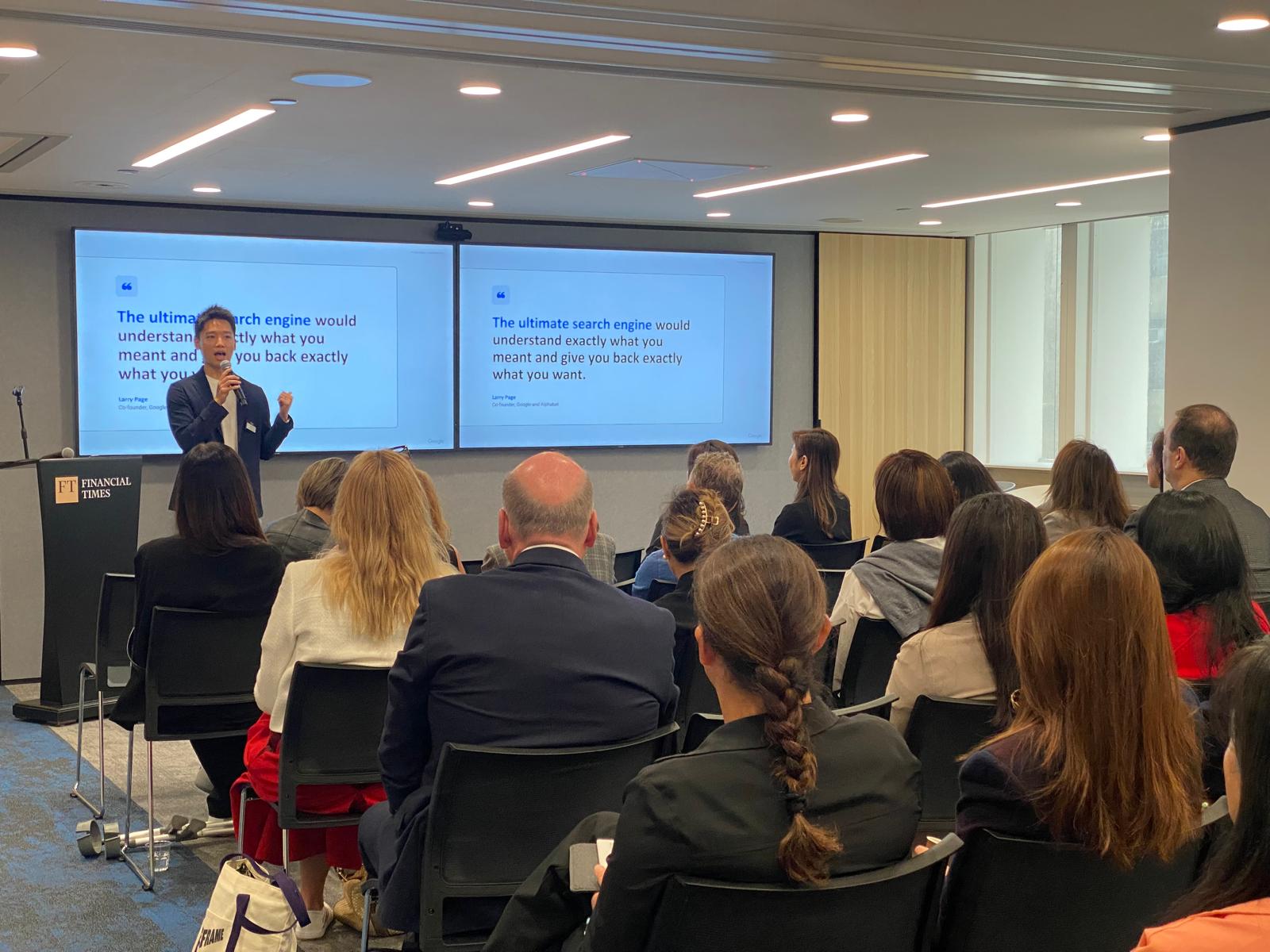
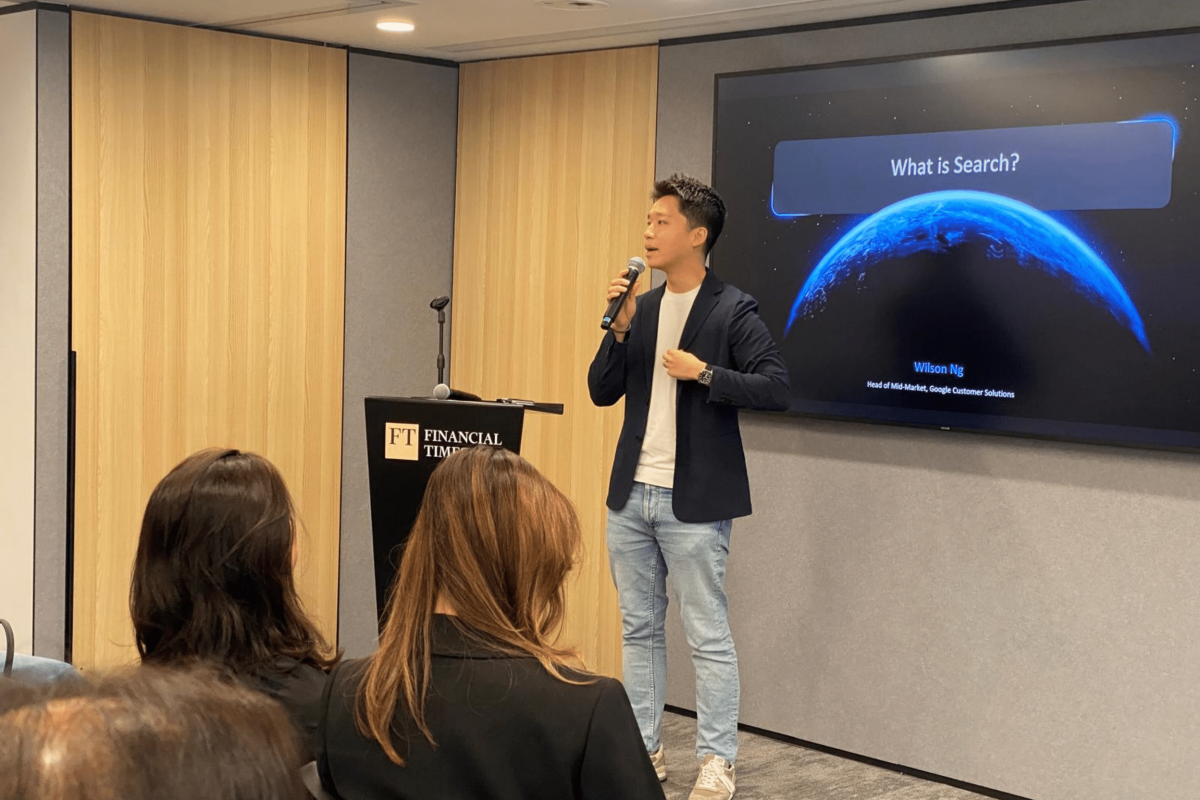
The AI Toolkit Event: Hong Kong November 2025. Wilson Ng talking about how search is changing in the face of AI, and what this means for marketing leaders building future-ready brands.
The Results We’re Provided
With AI, Search has evolved by combining the power of the LLM experience with high quality results from the web so people can quickly find information, even for long or complex questions that may not have a single “right” answer.
AI Overviews brings the helpfulness of AI into the main Search experience, and has been one of the most successful launches in Search in the past decade. AI Overviews has more than 1.5 billion users in more than 200 countries and territories every month. It’s so helpful and unique because it allows you to ask complex questions like you would in a normal conversation.
We’re seeing that people who use AI Overviews are more satisfied and search more, asking new types of questions. We see a learning effect as people learn what AI Overviews can do, they start asking new types of questions, including more complex and nuanced questions that they wouldn’t have typically searched for in the past.
And for those power users? There’s AI Mode. We see users using AI Mode for help with more exploratory and complicated tasks, like shopping comparisons, recommendations, how-tos and travel and local planning.
While we’re still in the early innings of this shift towards AI, what is certain is that a new era of Search means new business opportunities. There are 3 key takeaways that marketers can take action right now, as they navigate this shift.
3 Key Takeaways for Marketers
SEO principles still apply with GEO
As marketers navigate towards GEO (Generative Engine Optimisation), the golden rules of SEO still apply. Brands should continue to focus on providing users with unique and valuable content, make sure search engines can access your content, and provide an excellent web experience.Diversify and enrich your brand content
With LLMs, new concepts such as information gain and entity association have emerged. It’s even more mission critical for brands to prioritize creating content that adds unique value or a new perspective, in addition to ensuring your content is endorsed by credible and reputable information sources. We’re seeing AI-powered search engines quoting from a number of different reputable sources such as YouTube, Wikipedia, Reddit, etc.Stay open-minded, test and learn
A recent study from Ahrefs which analysed 146 million search engine result pages revealed that AI Overviews appear on 21% of all keywords, with a higher share in science, health, and pets and animal categories. Marketers should continue to experiment to understand when and how their brand is showing up in AI powered summaries. New tools are also available to track AI chatbot referrals to your domains, which allows you to garner insights around the different types and quality of traffic that is generated. Lastly, for SEM, tools such as AI Max allow marketers to fully harness the power of AI with search term matching, text customization and final URL optimization.Conclusion
What will always remain true is that human curiosity is limitless. The transition to AI-powered search is not just a technological upgrade; it is an opportunity to connect with customers more precisely than ever before, and we are all a part of this shift.
Wilson Ng is currently Head of Mid-Market, Google Customer Solutions and has been at Google for more than 10 years, he presented at The Marketing Society AI Toolkit event in Hong Kong in November 2025.